This article was automatically translated by AI.
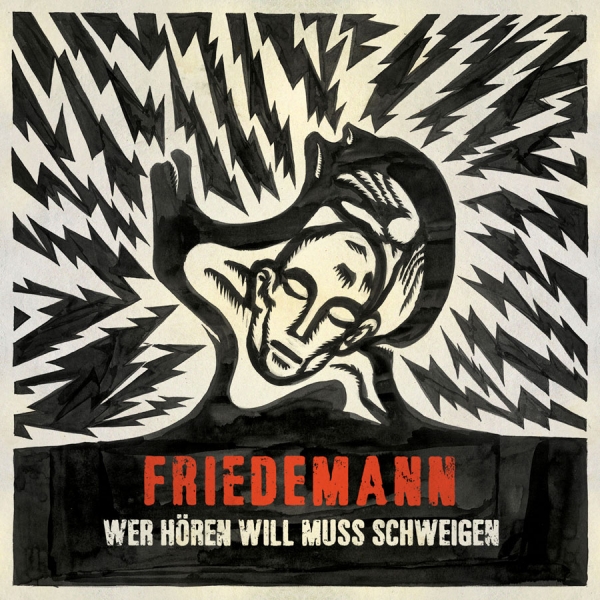
Now Friedemann has followed up with "Wer Hören will muss schweigen" and released his second album. With this album, Friedemann has once again created a very personal work. Lyrics that touch the heart and resonate deeply.
The CD begins with "Gejammer" and the first lines are:
This whining
and this wailing
in this city,
I am so fed up with it.
This grumbling
and this complaining
in this country
drives me out of my mind.
We know the message from COR, especially from Friedemann, that we have everything and could be satisfied. Why are we not satisfied when we have everything we need to live? A philosophical, yet also existential question. A question that everyone should ask themselves, yes must, in order to eventually be content with themselves and the world. This may already annoy some people, but isn't that what we all want from life? To be satisfied, yes, to be happy.
"Djamila" is a song that follows, presented with a heavy, dark guitar melody, and it also touches deeply. Again, a wonderful line:
Close your eyes, think with your heart
Who or what Djamila is remains unclear. However, the lyrics provoke thought, and that is exactly what Friedemann wants.
Friedemann wants to achieve more with his songs than just making an album and expressing his thoughts. He wants to reach people.
"Wer Hören will muss schweigen" is not only the third song but also another statement that is so true it hurts. And here again, the question arises whether we really listen to other people and take it in. Or is our new smartphone and the thousandth post on Facebook and a new like more important?
Friedemann delivers this song with his powerful, slightly raspy voice, accompanied by dark sounds. For the first time, a drum is heard quite powerfully, almost overwhelming.
You can already tell after these three songs that the tracks are even better than on the first album. The arrangements are in a way more professional, the recording is even more fitting, and Friedemann himself works more with his voice. This way, Friedemann creates a very own, personal aura with each song that is hard to escape.
However, the album also has fresh songs with a positive message, as shown by "Liebe". A refreshing song, the best song I've ever heard on the topic. A song for the freedom of love, for breaking conventions. There is no right gender. There is love. Whether between the same or the opposite sex. A song for the freedom of love without drifting into kitsch or esoteric triviality. Just for this song, buying this album is worth it.
If you have what you need, what are you missing?
That's what Friedemann asks in "Haben und Brauchen".
What is the answer?
This strong, ninth song on the album slightly reminds me of the old German-language songs by Element of Crime or Funny van Dannen in terms of arrangement.
And in song number ten, Friedemann receives a special guest at the microphone. Gunnar from Dritte Wahl supports him with vocals. The song even sounds as if Gunnar from Dritte Wahl had a hand in it. A powerful drum, strong vocals, and lyrics that encourage sing-alongs. Perhaps the only radio-friendly song on the album. Here, the trend is hit. German lyrics, semi-acoustic and lively. Between folk festival and university campus.
In the last four songs, Friedemann is again alone at the microphone.
The fourteen songs on "Wer Hören will muss schweigen" are all full of power, heart, and truth. Perhaps a bit too much in length.
But maybe I also need to learn to listen even more, even better.
Friedemann, this album not only touches me; it hits me right in the heart.